
Your Garage Door Making Loud Noises — What They Mean at a Glance
Garage door making loud noises what they mean is something every homeowner should understand — because those sounds are rarely random. They’re early warnings that something inside your garage door system needs attention.
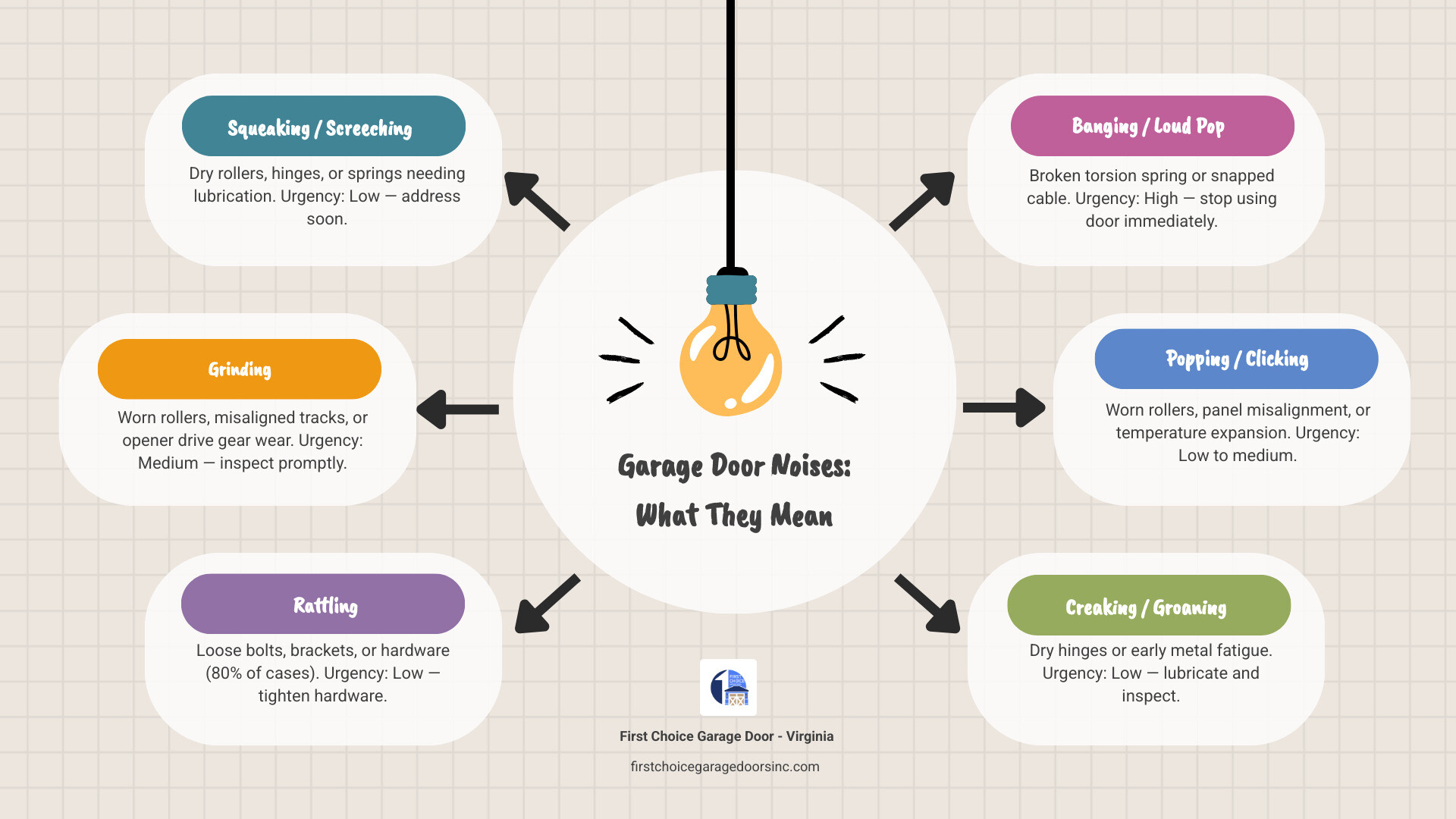
Here’s a quick breakdown of the most common garage door noises and what they signal:
| Sound | Most Likely Cause | Urgency |
|---|---|---|
| Squeaking / Screeching | Dry rollers, hinges, or springs needing lubrication | Low — address soon |
| Grinding | Worn rollers, misaligned tracks, or opener drive gear wear | Medium — inspect promptly |
| Rattling | Loose bolts, brackets, or hardware (accounts for ~80% of rattles) | Low — tighten hardware |
| Banging / Loud Pop | Broken torsion spring or snapped cable | High — stop using door immediately |
| Popping / Clicking | Worn rollers, panel misalignment, or temperature expansion | Low to medium |
| Creaking / Groaning | Dry hinges or early metal fatigue | Low — lubricate and inspect |
Think of your garage door like any hardworking mechanical system. A garage door opened three to four times a day racks up well over 1,000 uses every year. With that kind of repetition, wear is inevitable — and noise is usually the first sign something is off.
Ignoring these sounds doesn’t make the problem go away. It usually makes it worse — and more expensive.
Garage Door Making Loud Noises What They Mean: A Diagnostic Guide

If you have lived in Northern Virginia for a few seasons, you know that our temperature swings can be tough on home exteriors. Your garage door is no exception. Understanding Why Your Garage Door Is Noisy is the first step toward restoring peace and quiet to your home.
Most noises stem from a handful of mechanical culprits: friction, misalignment, loose hardware, or vibration. When parts aren’t gliding as they should, they “protest” by making noise. Over time, metal fatigue and temperature expansion can cause even a well-installed door to drift out of its ideal settings.
To help you decode the “language” of your door, we have put together a comparison of what is normal versus what should cause concern.
| Normal Operation | Problematic Noise |
|---|---|
| A steady, low-level hum from the motor | A straining, high-pitched whine or loud clicking |
| Light “clinking” of the chain (on chain-drive models) | Harsh grinding or metal-on-metal scraping |
| Soft “whoosh” of the door moving through the air | Sudden bangs, pops, or rattling that shakes the tracks |
Squeaking and Screeching: Garage Door Making Loud Noises What They Mean for Lubrication
High-pitched squealing is often the most annoying sound a door can make, but it is also one of the easiest to fix if caught early. This sound is essentially a cry for help from dry hinges, roller bearings, or springs. When the factory-applied lubricant dries out—which happens frequently in the humid Virginia summers or freezing winters—metal begins to rub against metal.
Learning How To Keep Your Manassas Garage Door Moving Quietly starts with the right products. We always advise homeowners to use a dedicated silicone-based spray or white lithium grease. These lubricants are designed to cling to moving parts without attracting the dust and grit that can turn into a destructive “grinding paste.” Seasonal maintenance, ideally performed every six months, ensures these contact points stay slick and silent.
Grinding and Rattling: Garage Door Making Loud Noises What They Mean for Hardware
If your door sounds like a ghost shaking chains in the attic, you are likely dealing with loose hardware or worn-out rollers. Interestingly, statistics show that loose bolts, nuts, and brackets account for approximately 80% of common garage door rattles. Because the door vibrates every time it moves, fasteners naturally back out over time.
You can often find Grinds Pops And Bangs A Guide To Fixing Scary Garage Noises are caused by more than just a loose screw. A harsh grinding noise often indicates that the metal rollers have reached the end of their lifespan or that the tracks have fallen out of alignment. In some cases, the noise is coming from the opener’s drive gears. If these plastic gears begin to strip, they will emit a loud, vibrating “rrrrr” sound. Using a socket wrench to snug up loose hardware can reduce noise levels by up to 70%, but if the grinding persists, it may be time for a professional to check the track alignment and gear health.
Banging and Popping: Critical Safety Warnings
While a squeak is a nuisance, a loud bang is a red alert. If you hear a sound like a gunshot or a car backfiring coming from your garage, it almost always means a torsion spring has snapped. These springs are under immense tension and are typically rated for about 10,000 cycles—which, for most Northern Virginia families, translates to 7 to 12 years of use.
Listen Up When Your Garage Door Noise Means Trouble because operating a door with a broken spring or snapped cable is incredibly dangerous. The door may feel hundreds of pounds heavier, or it may sit crooked in the tracks. You can perform a “half-mast test” to check balance: disconnect the opener and lift the door halfway by hand. If it doesn’t stay in place, the springs are likely failing. If you hear a loud pop or bang, stop using the door immediately and call for professional intervention.
DIY Maintenance Steps for a Quieter System
Many of the issues that cause a garage door making loud noises what they mean can be prevented with a little proactive care. Exploring More Reasons A Garage Door Could Become Noisy reveals that dirt and debris are often to blame for minor hitches and pops.
Here is a simple checklist for homeowners in Manassas and the surrounding areas:
- Track Cleaning: Wipe the inside of the tracks with a damp cloth to remove grease buildup and grit. Do not lubricate the inside of the tracks; the rollers need friction to roll, not slide.
- Tighten Fasteners: Use a socket wrench to check the bolts on the hinges and the track brackets. Be careful not to overtighten and strip the metal.
- Visual Inspection: Look for frayed cables, rusted hinges, or rollers with “flat spots.”
- Lubrication: Apply your silicone or lithium-based spray to the hinges, roller bearings (the center part), and the full length of the torsion spring.
Garage-Door-Safe Lubricant List:
- Silicone-based sprays (excellent for temperature resistance)
- White Lithium Grease (great for metal-on-metal hinges)
- Specialized “Garage Door Lube” aerosols
The Benefits of Regular Maintenance and Upgrades
Sometimes, the best way to handle a noisy door is to upgrade the components that are causing the racket. The Silent Treatment How Regular Maintenance Reduces Garage Door Noise often involves switching from old-fashioned steel rollers to modern nylon versions. Nylon rollers can reduce noise by 50% compared to metal rollers because they absorb vibration rather than transmitting it.
If your opener is the primary source of the noise, consider the drive system. While chain-drive openers are durable, they are inherently noisier. Upgrading to a belt-drive opener can result in up to a 70% noise reduction, making the door nearly silent from inside the home. Regular biannual tune-ups not only keep things quiet but also extend the lifespan of your entire system, potentially doubling the years you get out of your opener and springs. For more tips on specific sounds, you can always browse our Tag/Noisy Garage Door resources.
Frequently Asked Questions
Why is my garage door suddenly making a loud bang?
A sudden loud bang, often sounding like a gunshot, typically indicates a broken torsion spring. This is a critical safety issue because the spring is what actually lifts the weight of the door. If a spring breaks, the door can become a falling hazard. You should stop using the door immediately and avoid attempting to lift it manually, as this can cause further damage to the opener or result in injury.
What is the best lubricant for a noisy garage door?
The best choice is a high-quality silicone-based spray or white lithium grease. These products are designed to withstand the temperature fluctuations we see in Northern Virginia without becoming gummy or dripping off. You should strictly avoid using WD-40; while it might provide a few minutes of quiet, it is actually a solvent, not a long-term lubricant. It will eventually strip away existing grease and attract dust, making the noise worse in the long run.
How often should I perform maintenance to prevent noise?
Industry experts recommend a full inspection and lubrication every six months. In our region, the best times are late spring and early fall. This schedule prepares your door for the expansion of metal in the summer heat and the contraction and lubricant thickening that occurs during our cold winters.
Conclusion
At First Choice Garage Doors, we believe your home should be a place of peace—not a place where you’re startled by a crashing door every time someone arrives home. We specialize in expert repair and maintenance throughout Northern Virginia and Manassas, taking a safety-first approach to every job. Whether you need a simple lubrication service or a complex spring replacement, our professional tune-ups are designed to keep your system silent and reliable for years to come.
Don’t let a small squeak turn into a major breakdown. Contact us for expert garage door repair in Northern Virginia today, and let us help you get back the peace and quiet you deserve.